
Illawarra · Macarthur · Wollondilly
Moth Control
Clothes moth and pantry moth control across the Illawarra and Macarthur — we find where they are breeding and treat the wardrobes, carpets and pantries they live in.
Licensed & insured · Family- and pet-safe · Same-day service · Open 24/7
Get a moth control quote
Tell us what's bugging you — we'll get back fast with a no-obligation quote. Takes ~20 seconds.
Fully Licensed
No Mess Left
Local Knowledge
Responsive Support
It's the larvae that do the damage, not the moths you see
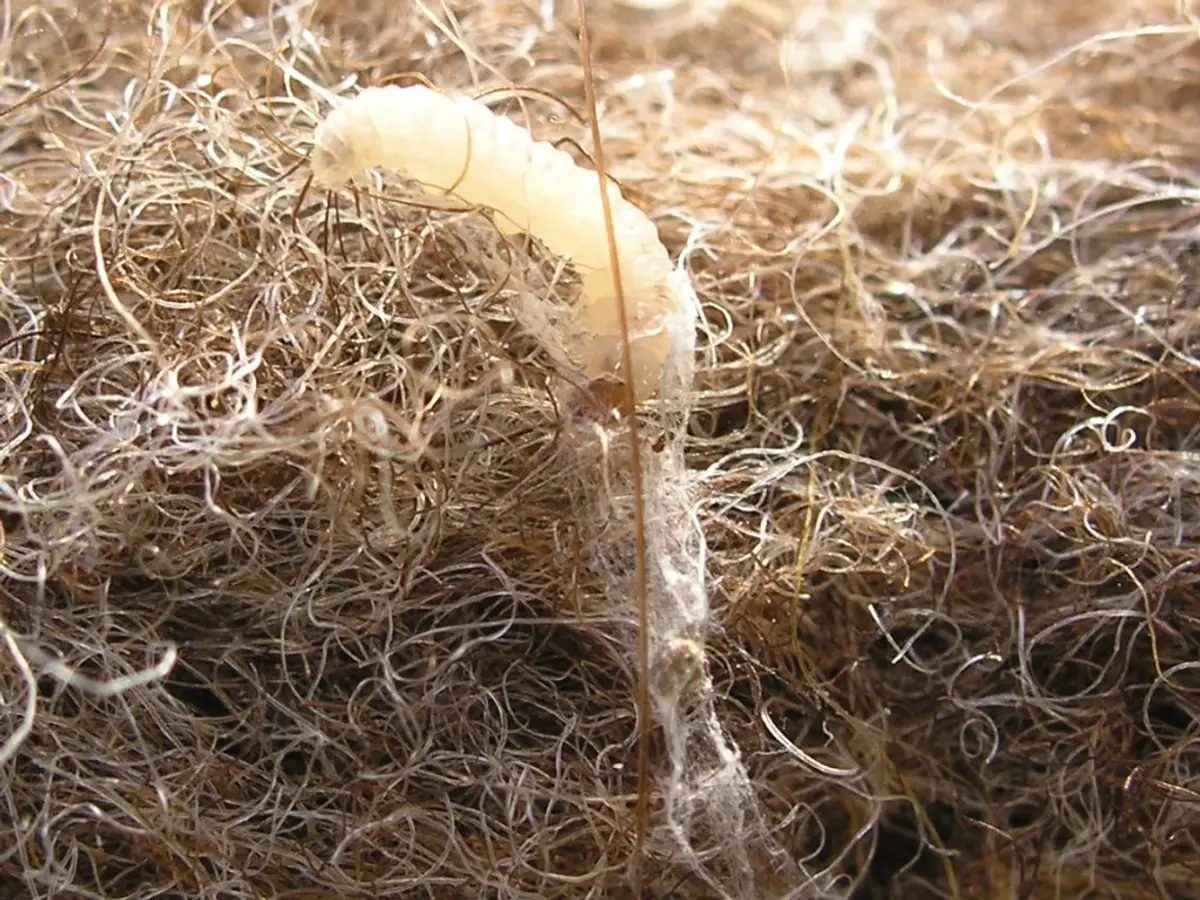
A moth fluttering out of a wardrobe or pantry is the adult stage. The damage is done by the larvae, which hide where it is dark and undisturbed — in folded wool, under furniture, along carpet edges, or inside opened packets of flour, rice and cereal. Getting rid of moths means finding where they are breeding, not just the ones you can see.
- Wardrobes, drawers and stored clothing
- Wool, cashmere, silk, fur and feather items
- Carpets and rugs, especially under furniture and along edges
- Pantries, cupboards and stored dry food
- Linen presses and storage boxes
- Family- and pet-safe products, applied by licensed technicians
What moths and moth damage look like
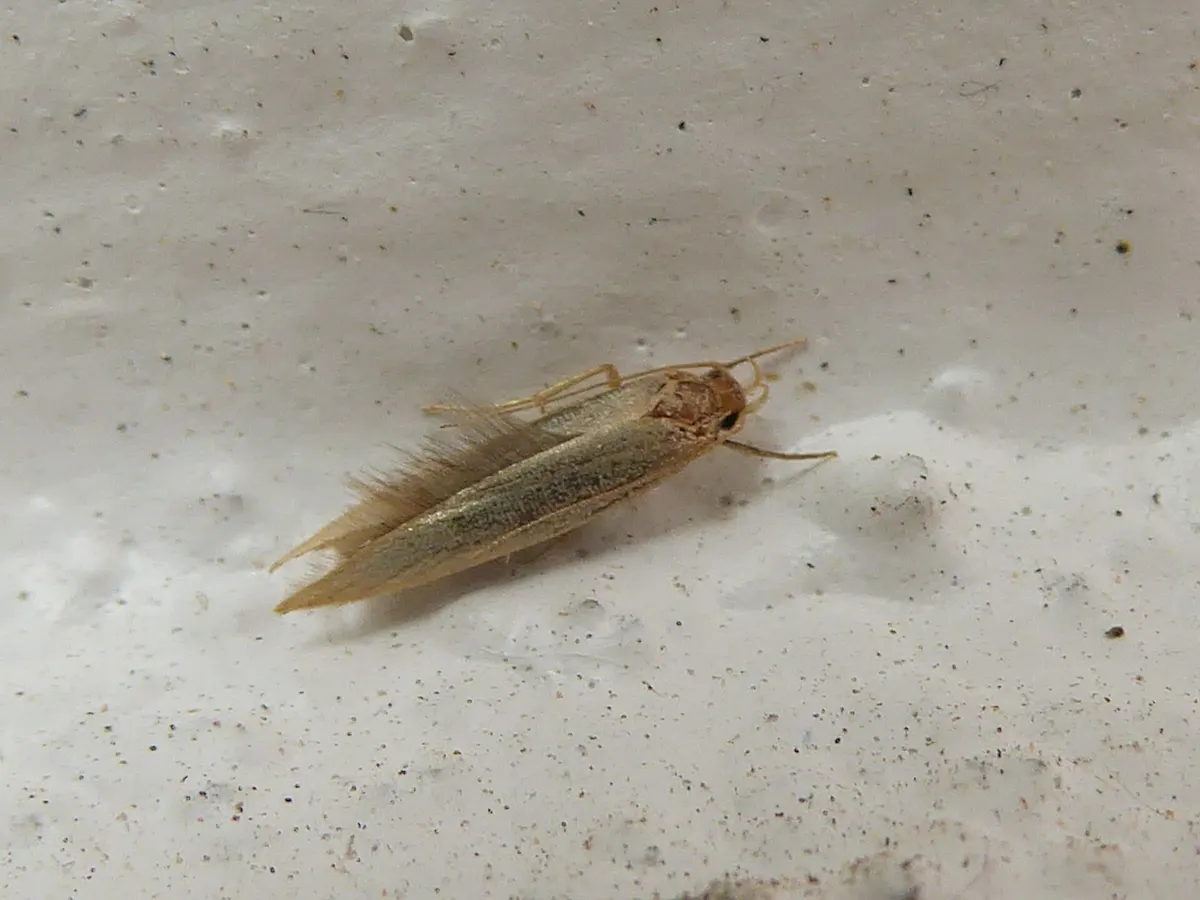
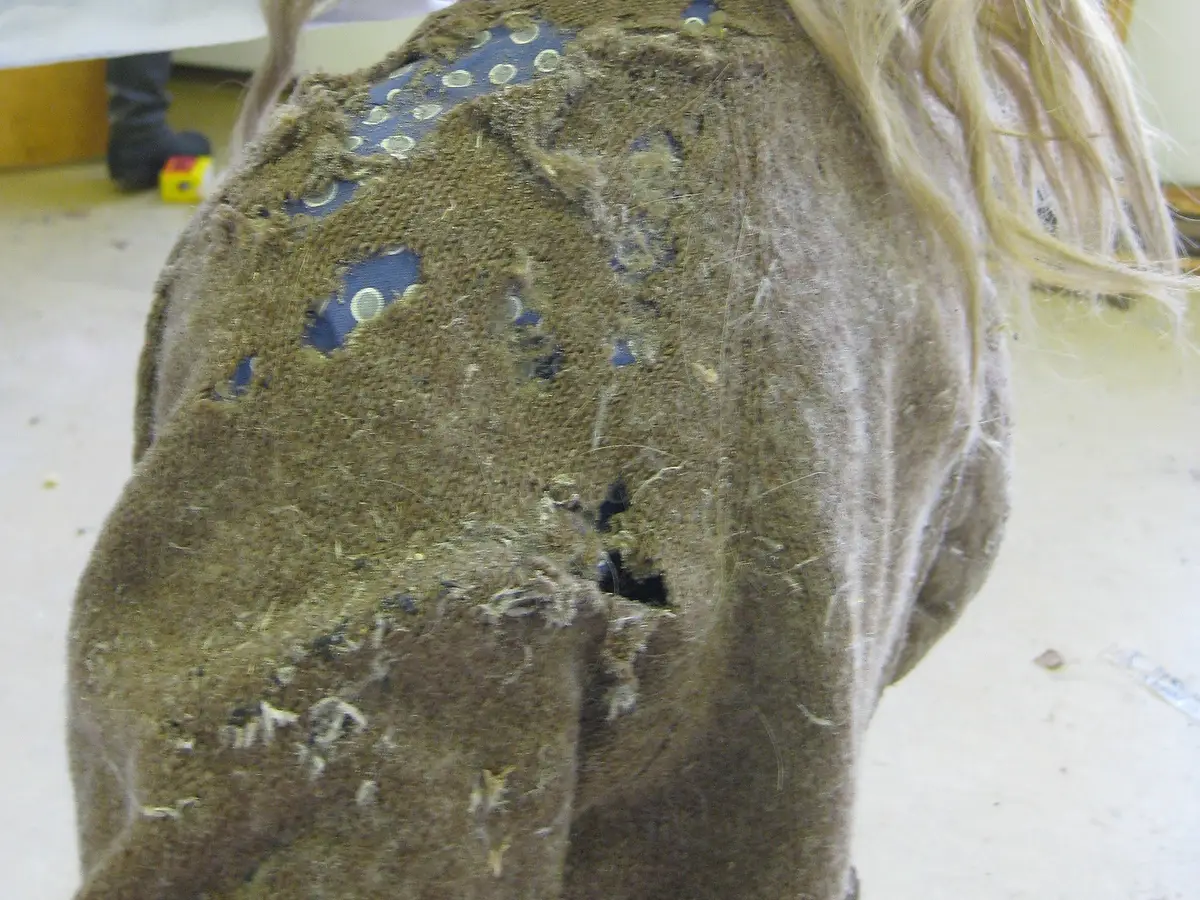
Reference photos to help you work out what you are dealing with. These are not photos of Premier jobs.
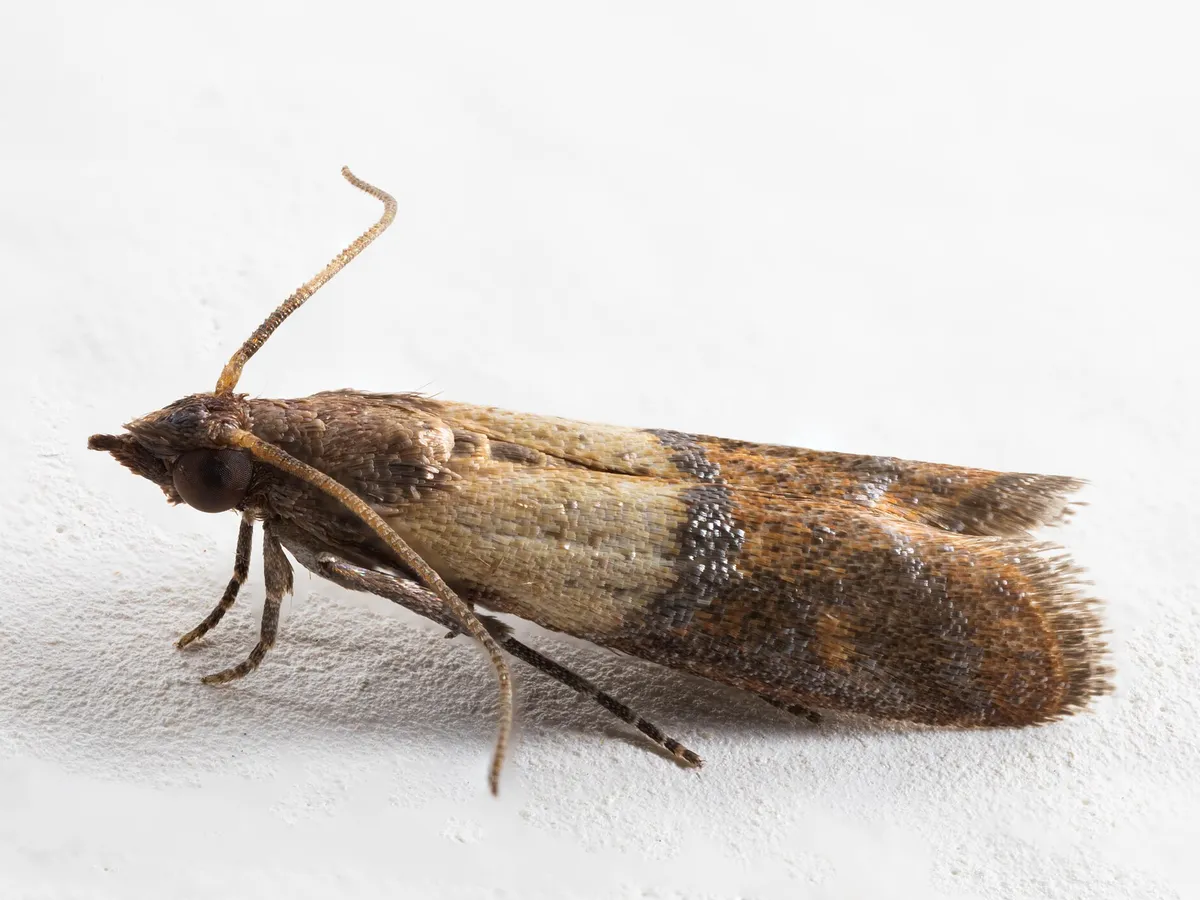
Clothes moths or pantry moths?
Clothes moths are small and pale gold, stay close to wardrobes and carpets, and leave irregular holes, thinning and fine silk webbing in natural fibres. The 'carpet moths' people ask about are the same clothes moths, feeding on wool carpet and rugs — usually under furniture and along the edges. Pantry moths have two-tone wings — pale at the front, coppery at the back — and show up around the kitchen, with webbing or clumping inside dry food. They need different treatment, which is why the first job is working out which one you have and where it is coming from.
What we do, and what we don't
We are licensed pest technicians: we find and treat the moth infestation. We don't clean, repair or restore damaged clothing, rugs or carpets, and affected food should be thrown out rather than treated. We'll tell you plainly what to wash, freeze or discard before and after the treatment.
How it works
- 1
Tell us what you're seeing
Call or send the form with your suburb and where the moths or the damage are — wardrobe, carpet, pantry or somewhere else. A photo helps.
- 2
We find the source
A licensed technician inspects the wardrobes, carpets, storage and pantry areas to find where the larvae are actually breeding.
- 3
We treat where they breed
Targeted treatment of the affected wardrobes, drawers, carpet edges, cupboards and pantry areas, using family- and pet-safe products.
- 4
We tell you what to do next
Plain advice on what to wash, freeze or throw out, and how to store wool and dry food so they don't come back.
Usually treated together
Silverfish treatment
Silverfish damage the same stored paper, linen and natural fibres in the same dark cupboards, and the same undisturbed storage suits both.
Learn more →
General pest treatment
Cockroaches, spiders, ants and silverfish, inside and out — including roof voids and subfloors.
Learn more →
Pantry moths in a food business?
Cafés, restaurants and commercial kitchens are covered by our hospitality pest control.
Learn more →
Moth control across the Illawarra, Shoalhaven, Macarthur, Wollondilly and the Southern Highlands
Not sure if you're in our service area? Call 02 4217 0117 and we'll tell you straight away.
What our customers say
Rated 4.9 out of 5 by 232 local customers on Google.
Great service every time! Reece is honest and very meticulous with his work that's why I have been using his services for 5 years. Highly recommended.
I've been using Premier Pest Control for 5 years nows. Reece is the best in the business I recommend him to everyone!
I don’t usually leave reviews but this one was worth it. From the first call to the actual service, everything was easy. The technician seemed knowledgeable and gave a few useful tips as well. So far, everything looks good and the pest problem hasn’t come back.
Frequently Asked Questions
The questions we get asked most — answered plainly. Call 02 4217 0117 any time if yours isn't here.
Get my free quoteHow do I know if it's clothes moths or pantry moths?
Look at where they are and what the wings look like. Clothes moths are small and plain golden-buff (a duller greyish cousin with faint spots turns up too), stay around wardrobes and carpets, and leave holes and fine webbing in wool and other natural fibres. Pantry moths have two-tone wings — pale at the front, coppery-brown at the back — and turn up in the kitchen, with webbing or clumps inside dry food. If you are not sure, send us a photo.
Why are my clothes getting holes if I never see any moths?
Because the larvae do the damage and they stay hidden in dark, undisturbed places — folded wool at the back of a wardrobe, under furniture, or along carpet edges. The adult moths are small, avoid light, and often go unnoticed. Irregular holes, thinning patches and fine silk webbing in natural fibres are the usual sign.
Are carpet moths different from clothes moths?
No — the moth eating a wool carpet is the same clothes moth. Wool carpet under furniture and along skirting boards is the biggest undisturbed meal in the house, so that is one of the first places we look.
Are moths harmful?
They don't bite and aren't known to spread disease to people or pets. The damage is to belongings: wool, silk, cashmere, fur and feather items, carpets and rugs for clothes moths, and dry food for pantry moths. Food with larvae or webbing in it should be thrown out.
What should I do before the treatment?
We'll give you specific instructions when we book, but generally: clear the affected wardrobes, drawers or pantry shelves so the technician can reach them, and keep aside anything you think is affected rather than moving it to another room. Throw out any dry food with larvae or webbing in it.
Can you repair or clean damaged clothes and carpets?
No — cleaning and repairing clothing, rugs and carpets is a job for a dry cleaner or carpet specialist, not a pest controller. What we do is find and treat the infestation, and tell you which items need washing, freezing or throwing out so the moths aren't carried back in.
Further reading
Straight answers from our technicians, sourced to public authorities so you can check them yourself.
Moths in the wardrobe or the pantry? Let's find the source.
Free quote · No obligation · Open 24/7 · Same-day service available
Free quote · No obligation · Open 24/7